TU intensifies research in sub-Saharan Africa
16.02.2025
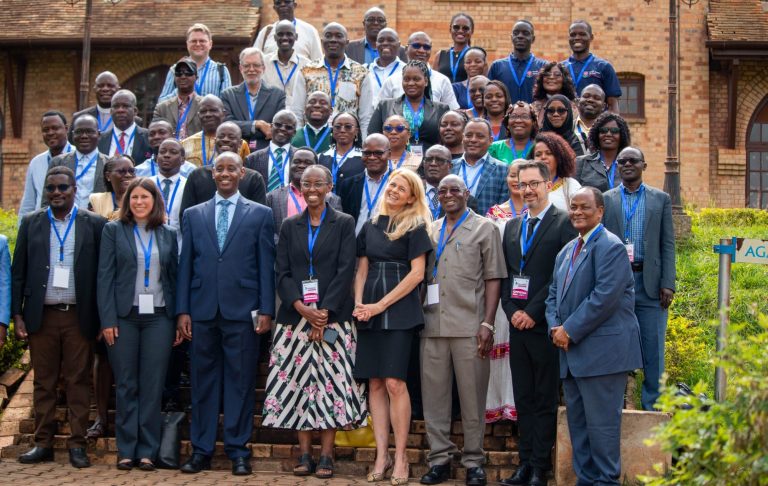
Technische Universität Dortmund (TU Dortmund) is stepping up its academic engagement in sub-Saharan Africa with the launch of a new research project on geopolitical media influence and the closing conference of a major pan-African journalism education initiative, in Uganda from January 31 to February 8. Together, the two events highlight the university’s growing role as a key European partner in research and higher education cooperation across the continent.
Investigating the new geopolitics of media
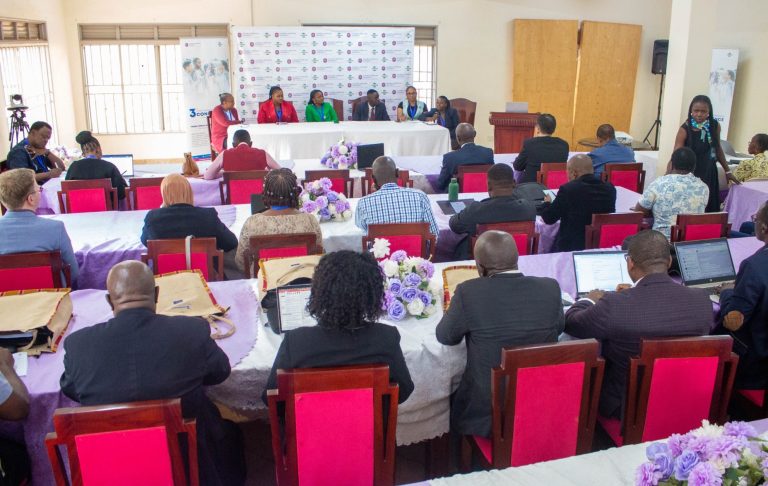
At the heart of this renewed momentum is the project “The ‘Great Game’ of Media and Politics in Africa: Geopolitics and Media Intervention post-2022,” funded by the Daimler und Benz Foundation. The initiative examines disinformation and manipulation campaigns conducted by foreign state actors in sub-Saharan Africa and seeks to better understand how geopolitical rivalries are reshaping media landscapes.
The project is jointly led by the Erich-Brost Institute for International Journalism at TU Dortmund and Makerere University in Uganda - one of Africa’s oldest and most prestigious institutions - in collaboration with eight academic partners from Nigeria, Ghana, Kenya, Malawi, Burkina Faso and Tanzania.
Researchers will investigate how China, Russia and Turkey, alongside Saudi Arabia, the United Arab Emirates and potentially other BRICS countries, influence media systems in sub-Saharan Africa. The study focuses in particular on their interactions with newsrooms, journalism educators and media policy-makers, and on the broader impact these relationships have in selected African countries. By generating empirical data on foreign media intervention, the project aims to inform both academic debate and policy discussions at a time of intensifying global competition.
CoMMPASS: A pan-African classroom
The second major milestone was the closing conference of CoMMPASS ( Communicating Migration and Mobility, E-Learning Programs and Newsroom Applications for Sub-Saharan Africa), an Erasmus+ project co-funded by the European Union. Hosted by Uganda Christian University in Mukono, near Kampala, the event brought together university partners and higher education decision-makers from across Africa to reflect on the future of online journalism education.
Launched in 2024 by teacher-researchers from six African universities in Uganda, Malawi and Burkina Faso, and the support of partners from Portugal, the CoMMPASS course on migration in Africa has reached participants in 29 countries. Designed as a flexible, multilingual online programme, it combines academic research with newsroom practice and promotes ethical, data-driven reporting. More than 2,300 journalism students and professional journalists have taken part, supported by a network of 37 partner universities based on the African continent.
Three migration reporting awards were announced at the conference. First prize went to a cross-border Ghanaian-Nigerian team of journalists led by Henry Nwachukwu, Emmanuella Agbezukey and Blessing Bolaji for a story entitled ‘Digital Traps: How Online Promises Are Hurting Migrants across the Nigeria–Ghana Corridor’. The second prize went to Djakaridia Siribie, a Burkinabe journalist from the state-owned daily newspaper Sidwaya, for an article on ‘Refugees transition from humanitarian assistance to self-reliance’. The third prize went to Collins Mtika, a seasoned and award-winning journalist from Malawi, for a story entitled ‘When the rains leave: Malawi's hidden climate–migration trap’.
From dialogue to recognition
The Mukono conference marked the culmination of a broader dialogue initiated in 2023 in Kampala, where researchers and representatives of organisations including the Refugee Law Project, the International Labour Organisation, leading local media and the United Nations High Commissioner for Refugees examined the relationship between media and migration. A second meeting in Blantyre, Malawi, focused on innovation in journalism education and new forms of collaboration between educators and learners.
In Mukono, discussions centred on how African universities can take greater ownership of migration narratives in academic teaching, move beyond stereotypes and harness digital storytelling for social change. Participants also debated the validation of competencies acquired through online learning, the role of micro-credentials and strategies for securing official recognition of digital education formats.
The conference featured two prominent keynote speakers: Professor Ralph Afolabi Akinfeleye of Nigeria, the first African elected to the Council of the World Journalism Education Congress - which will be hosted by the Erich-Brost Institute in Berlin in 2028 - and Professor Sisanda Nkoala of South Africa, Secretary General of the African Journalism Educators Network.
Building on long-term research partnerships
The CoMMPASS initiative builds on long-standing research conducted at the Erich-Brost Institute on migration coverage in Africa and Europe. In 2021, the Institute co-edited with UNESCO the handbook “Reporting on Migrants and Refugees,” now available in seven languages. The project also draws on insights from the AMAZE initiative, funded by the German Federal Foreign Office, which combined comparative research on migration reporting in Europe and Africa with networking and training programmes for African journalism educators.
Through these interconnected initiatives, TU Dortmund is consolidating a strategic commitment to sub-Saharan Africa that links research, teaching and capacity-building. By addressing both geopolitical media influence and the professional training of journalists, the university positions itself at the intersection of global media dynamics and local knowledge production, reinforcing academic partnerships designed to endure well beyond individual projects.